KPMG design maturity uplift through project work and coaching
Client
KPMG Australia
Sector
Professional Services
Timeline
6+ Months
My role focus
50% practitioner and 50% leader
My regular collaborators
Product managers (‘solution leads’), designers and researchers
Stakeholders
Head of Product, KPMG partners from (often) financial services, technology development team
Delivered
Frameworks, tools and methods for design maturity uplift that the team can apply and reuse independently.
Learning and development through practice and enablement.
Advocacy for team members.
Background
KPMG's Solutions department, established three years prior to me joining, is focused on delivering technology-enabled solutions to internal partners and divisions. The design team, initially comprised of five members, has undergone several changes while navigating a KPMG-Partner-led business model that prioritises relationships over scalable, product-led solutions. This environment has posed challenges in creating disruptive technology solutions at a quick pace and the role of Design is still being worked out.
Landscape
The immediate team has UX and CX designers and the researchers, many of whom have experience in more mature environments. However, few products have successfully reached the market at a reasonable speed.
Solution leads (product managers) recognise the importance of UX but often lack a comprehensive understanding of effective design practices. Their KPIs are primarily commercial, sidelining customer-centric goals. Design team does not have KPIs related to product success.
The technology team is dispersed across Australia and lacks familiarity with agile methodologies and design principles, and work in waterfall.
Additionally, existing customer research efforts focus mainly on high-level satisfaction surveys, which do not provide the necessary insights for understanding user needs for business and enterprise user types like buyer, user, IT manager, decision maker, etc. It is extremely hard and a long lead time to get access to customers for research due to non-standardised processes.
The department faced several challenges:
Limited understanding of effective design practices among solution leads (like product managers)
Dispersed technology teams unfamiliar with agile methodologies and design principles
Low UX and service design maturity within the organisation and perception that it was better than in reality
Insufficient customer research for understanding user needs (end-user) due to low contact with B2E customers
Difficulty in creating disruptive technology solutions due to the partner-led model
Lack of customer-centric goals in favour of commercial KPIs
The opportunity
Uplifting the UX and service design value and maturity within the Solutions department at KPMG Australia through project work and foster culture of collaboration
Approach
Stakeholder Engagement
Formed alliances with both design and non-design professionals to gain insights into current practices.
Immersion in Projects
Engaged deeply with ongoing projects to understand departmental dynamics and the role of design within the organisation.
Leadership Transition
Following my manager's unexpected long-term personal leave, I was asked to take her role, seizing the opportunity to drive change.
Goal Alignment
Established professional and stretch goals that aligned personal aspirations with departmental objectives.
Right place, right time
Finding this as an opportunity to uplift maturity for the team/department while creating my own growth.
Immediate Methods and actions
For the team
Developed a skills matrix to identify strengths and areas for growth.
Implemented on-the-job training opportunities.
Conducted a UX maturity assessment.
Proposed tools to enhance workflow efficiency.
Initiated weekly one-on-one meetings for personalised support.
Facilitated professional coaching training through KPMG.
For Research practice
Created an “Experience Vision” based on comprehensive research to be used for future state projects
Introduced "Jobs to be Done" methodology for research synthesis.
Conducted support call analyses in lieu of customer research.
Got junior designers to shadow me during customer interviews and conduct them
Engaged with KPMG Partners to recruit clients for research initiatives.
For Design practice
Developed service blueprints, value stream maps, and customer journey templates.
Established persona development from research.
Implemented heuristic analysis for design assessments.
Introduced severity measurements for UX issues.
Introduce and run weekly Design Critiques with with cross-departmental designers.
UX reviews and QA on work built by developers
Global platform design system - design component requests
Ways of working/collaboration
WoW workshops with our own team to note gaps and vision
Instituted regular retrospectives and actions for continuous improvement
Defined success metrics through “Definition of Done” and “Definition of Ready” for tasks
Planning programs of work into phases to create achievable and trackable milestones
Optimised JIRA for effective action tracking.
-
UX, UI and copy reviews
Revisiting Information architecture and content, using heuristic evaluation methods
-
Dovetail (research tool, repository)
Using Dovetail for tagging and synthesis to help build an enterprise repository of tags and learnings about our customers (buyers)
-
Journey map as a repeatable template to speed up future work
Customer experience map for an enterprise product solution with three types of users, documenting all stages end to end and systems and teams involved
Pain points and opportunities are noted below
From UX0-showstopper to UX4 – cosmetic issue
-
Retrospectives and Futurespectives
First the UX maturity was assessed individually and discussed where we wanted to go in the next 12 months. Gaps were assessed in our team and our next step of maturity. From this, actions were created about what to do next.
Long term initiatives
Our role and how we relate to others
Creating structures of core design role – accountability, alignment and boundaries
Design working with other teams like Brand and Go To Market for launch and customer engagement
UX task estimation and ways of working in tech. delivery projects
Communicating the value of design through pitch decks to the rest of the firm

Our tools and processes
Storage and access to documentation
Creating leaner messaging and documentation for our research and design reports
Influencing the design system of a platform based in KPMG Europe.
Technology Vendor assessment criteria to see fit for user needs

Our value and growth
Embedding CX metrics into our design and delivery process to measure experience
Investing in Skills and growth through finding gaps and finding budget for next financial year
Importance of team work and knowledge sharing to encourage peer-based learning.
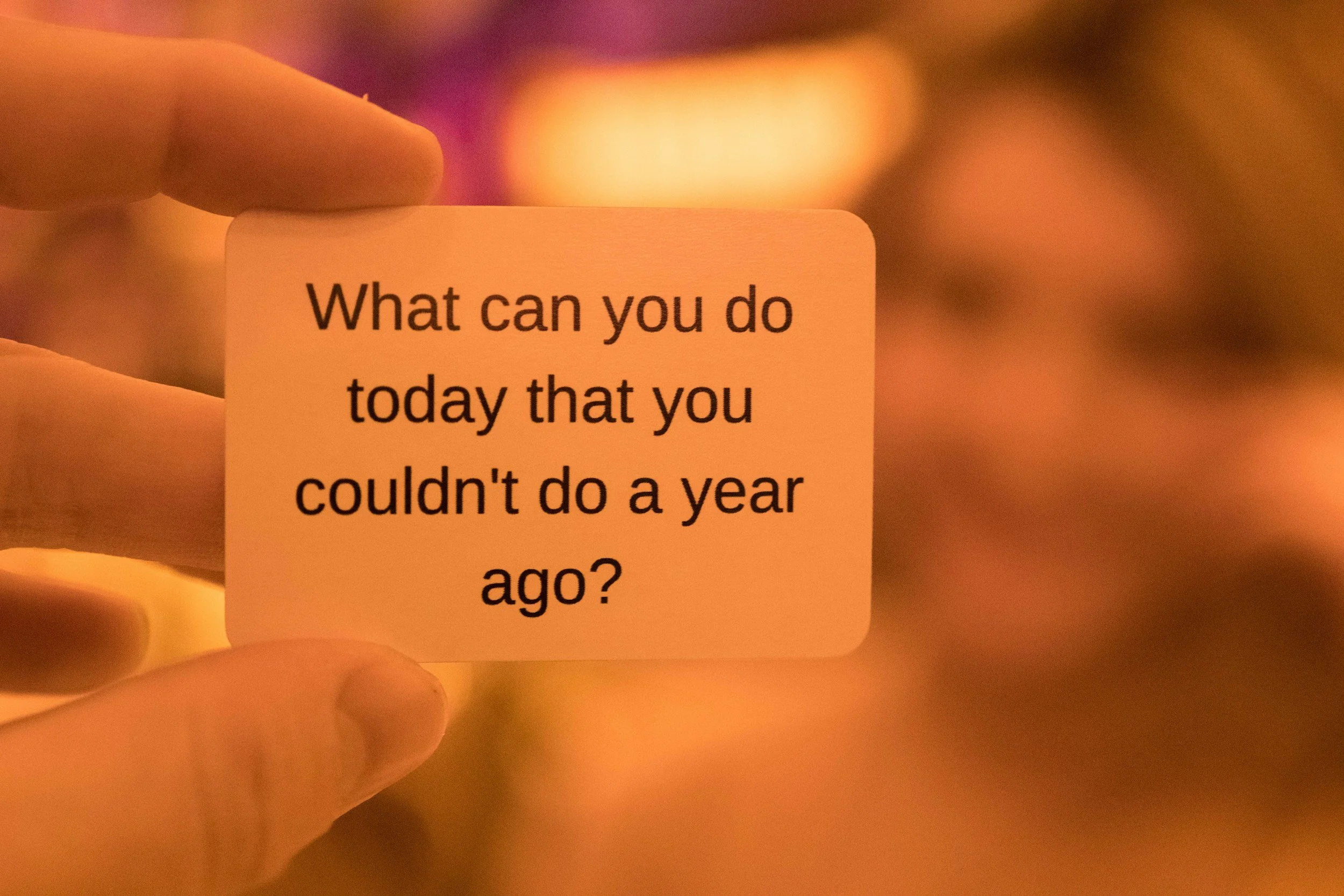
Tackling emerging challenges creatively
I used a combination of critical thinking problem solving, industry best-practices adopted to these situations. For the resolution an options analysis of - ‘do nothing’, ‘do something (X)’, ‘do everything (10X)’ to find the best value.
Situation
KPMG is a Partner-led company and our client was the ‘Partner’ as opposed to the end-user or company
The partners and the teams we service were from professional services departments like Accounting, Finance, Regulatory, etc.
Some in the organisation were unaware of our team and our work. Our department's future focussed name (Innovation, Solution, Ventures) didn't reflect our maturity accurately
The design and product team were not clear on design or digital maturity levels and thus, didn’t know how to increase the maturity for better outcomes for Design
Role of designers and researchers not fully understood even in the same department by Product and Tech team. Product leadership is also learning.
The waterfall or pseudo-agile way of working was followed by the department because their ‘clients’ (internal teams) were not working in Agile or IT style projects either
The design team was small before I joined (less than 2) and designers didn’t communicate with each other too much about the work and there was no general design process.
Complication
The partner-led business models made it hard to create product-focused, scalable tech solutions due to our ‘client’ being the Partner
The audience did not value the rigour of design and research methods they cared mainly about the results and outcomes
The incoming work for our team from our stakeholders was slow and those who knew us didn’t know at what point in the lifecycle to involve our team.
As a new member having worked in mix of different maturities of companies, I rated the UX maturity lower than those who had been there longer. Due to this my colleagues and manager were looking to learn more about maturity
Practitioners worked hard to market their value, but wasted potential arose as leadership was unaware of how they could assist earlier in the lifecycle for new programs of work
This was slowing down progress because of lengthy approval processes and sequential steps. This caused Solutions to reach the end customer slower to market, even at the ‘research’ stage for validating MVPs
The junior designers were viewed as creators of visuals; due to lack of discovery process, their work often overlooked user and business needs. They also struggled to communicate their process and results clearly causing them to seen less strategic.
Resolution
Visionary thinking is vital. While small changes are fine, aim for a shared vision.
Customise messages instead of imposing methods and focus on expected outcomes for ‘business’
Regularly communicate our team’s work at events through existing forums and our champions before creating new forums. (showcases, Teams channels and communities of practice)
Provided examples of low, mid, and high maturity from other organisations. Create a shared language for design and research terms—focus on being data-driven in terms of customer and analytics data, not just financial data.
By demonstrating value in small steps and having support from the head of product, as a strong advocate we eased some of the burden on practitioners to keep proving their value and instead focus their efforts on project work
While some Agile methods and principles were very useful when followed with integrity, The organisation may not be ready now or just never to embrace working in textbook Agile. So it was imperative to accept the velocity and adapt to what was achievable
Training designers to use standard templates and components like design systems, user guides, design principles, personas, customer journey maps, and research reports helped the audience see the rigour of our work, shifting the focus from just visual outputs.
Impact
Contributing to design system components globally for a KPMG proprietary platform
Increasing confidence in the junior designer to present their work with rigour
Improving well-thought out design decisions, reducing back and forth with devs by following a proper user-centred design process from problem-framing, low-fid, testing, high-fid and including regular share-backs
Improving collaboration with product managers and other team members through conversations and rituals
Improving design critical thinking by having regular design critiques
Reducing R&D process time by using repeatable templates for future projects
Introducing new ways of workshops, research methods and ideation, increasing library of accessible methods for different business problems
Introducing career skills assessment and skills matrix to self-evaluate design skills and help in performance reviews and goal setting.
Personal learning
This approach led to enhanced collaboration across departments, improved understanding of user-centred design principles, more efficient workflow, and increased visibility of the design team's value within KPMG.
This experience unexpectedly ignited my passion for people management both downwards and upwards/ I found fulfilment in coaching and mentoring team members, enabling them to excel through empowerment and resource sharing. Support from my (skip) manager was instrumental in navigating this transition successfully.
Unfortunately my time was cut short due to a long medical break so I was not there long enough to measure the impact. The following year, the department was restructured to create better accountability and growth, so the team members were able to take the learnings forward.